
How to do PR for a startup in India
Most founders think PR is something you do after you raise a round or hit a big milestone. By then, the story has usually been told by someone else, or by no on…
Most founders think PR is something you do after you raise a round or hit a big milestone. By then, the story has usually been told by someone else, or by no one at all. A startup that starts early gets something money can’t buy: third-party credibility. When a journalist writes about you, customers, investors and future hires believe it far more than anything on your own website.
Here is a practical guide on how to do PR for a startup in India, even if you don’t have a big budget or a big team yet.

Why PR matters for startups in India
Indian startups are fighting for attention in every sector at once: fintech, D2C, SaaS, food, fashion and more. Paid ads buy you attention for as long as you keep paying. Press coverage keeps working after the campaign ends. It shows up when someone googles your name, when an investor does their homework, and when a candidate checks you out before accepting an offer.
There is also a trust gap that every new brand has to cross. People don’t know you yet, so they look for signs that someone credible already does. A feature in a respected publication is exactly that sign.
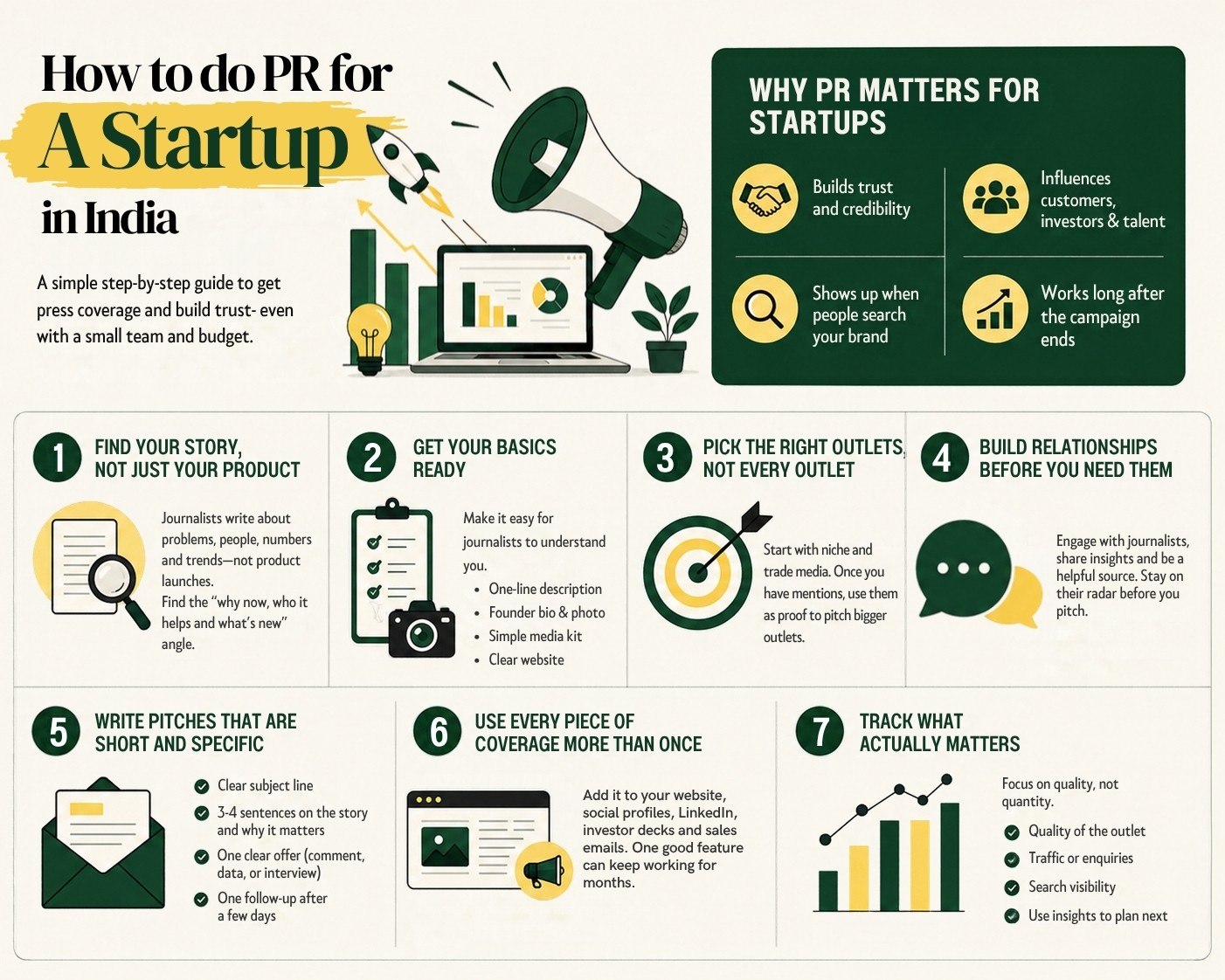
Step 1: Find your story, not just your product
Journalists don’t write about “we launched a new app”. They write about a problem, a person, a number or a trend. Before you pitch anyone, ask yourself:
- Why is this happening now?
- Who does it help, and how?
- What is surprising or new about it?
Good angles for startups include the founder’s journey, a data point from your own customers, a trend your startup sits inside, a local angle tied to your city or state, or a clear milestone like your first 1,000 customers.
Step 2: Get your basics ready before you pitch
The first thing a journalist does after reading your pitch is Google you. Make sure what they find is clear:
- A one-line description of what you do, in plain words
- A short founder bio with a good photo
- A simple media kit with your logo, product images and key facts
- A website that explains your business without jargon
If a journalist can’t understand what you do in thirty seconds, the pitch usually ends there.
Step 3: Pick the right outlets, not every outlet
Think in three tiers: national business and lifestyle outlets, trade and industry publications, and regional or city-focused media. Most startups should begin with trade and niche publications. Your story is a better fit there and the competition for space is lower. Once you have a few mentions, you can use them as proof when you pitch bigger outlets.
Step 4: Build relationships before you need them
Follow the journalists who cover your sector. Read what they write, share it, and respond thoughtfully. Offer yourself as a source for quotes on industry trends. This is often easier than landing a full feature, and it puts your name in front of the right people so that your pitch is not a cold email when the time comes.
Step 5: Write pitches that are short and specific
A good pitch is easy to say yes to. Keep it simple:
- A subject line that says what the story is
- Three or four sentences on the story and why it matters to that outlet’s readers
- One clear offer, such as founder availability for comment or data you can share
- A single follow-up after a few days, not daily nudges
Step 6: Use every piece of coverage more than once
Earned coverage is only useful if people see it. Add an “as featured in” line to your website, pin it on your social profiles, share it on LinkedIn, and include it in investor decks and sales emails. One good feature, used well, keeps working for months.
Step 7: Track what actually matters
The number of mentions is the least useful measure. Look at the quality of the outlet, whether it brought visits or enquiries to your website, and whether it now shows up when someone searches your brand name. Use this to decide where to focus next.
Common mistakes startups make with PR
- Pitching a product launch instead of a story. A launch is news only to you. Find the angle that matters to the reader.
- Sending one mass email to every journalist. It is easy to spot and easy to ignore.
- Waiting for a funding announcement. Founder stories, customer data and trends are all strong stories without a round attached.
- Treating paid posts as earned coverage. Readers, search engines and investors can tell the difference.
- Having a weak website when journalists look you up. The pitch can be great and still fail at this step.
- Expecting results from a single pitch. PR builds through steady, relevant effort over months.
How Sorta Famous helps startups with PR
Sorta Famous is a Mumbai-based PR and marketing agency that helps founders and brands build credible visibility. All of our engagements start with an in-depth audit of your current visibility and goals, followed by a media strategy built around your calendar and not a generic content plan. We also give project-based support without a long-term retainer, for founders who need a focused push around a launch or milestone. And there are no account managers in between. You work directly with the strategists running your campaign.
To start building press credibility for your startup, get in touch with Sorta Famous for a free 30-minute consult.
Frequently asked questions
How early should a startup start doing PR?
As soon as you have a clear story, which is usually before launch or right after your first customers. Early PR builds a trail of credible mentions that makes later announcements easier to land.
Can founders do PR themselves, or do they need an agency?
Founders can handle the basics: sharpening the story, building a media list and sending pitches. An agency helps when you need existing journalist relationships, better timing and more of your own time back to run the business.
What is the difference between PR and advertising for a startup?
Advertising is paid and you control the message. PR earns coverage in outlets you don’t control, which carries more credibility. They work best together.
How long does it take to see results from startup PR?
It depends on what is newsworthy. A launch or milestone can move quickly, while steady coverage takes months to build. Think of PR as a long-term trust builder, not an overnight spike.
Which outlets should an Indian startup target first?
Start with trade and niche publications in your sector and city-focused business media. Then use that coverage as proof when you pitch larger national outlets.
Can a startup get press coverage without funding news?
Yes. Founder stories, customer data, industry trends and local angles can all make a strong story without any funding announcement.
Is PR support available without a long-term retainer?
Yes, with agencies that offer project-based engagements. It is worth asking about directly, especially if you only need support around a launch or milestone.