Performance marketing for small businesses in India
Every small business owner has been there. You put some money into ads, a few likes come in, maybe a couple of enquiries, and then you are left wondering what t…
Every small business owner has been there. You put some money into ads, a few likes come in, maybe a couple of enquiries, and then you are left wondering what the money actually did. Performance marketing exists to remove that guesswork. You pay for results you can measure, and you can see exactly what each rupee brought back.
This guide explains performance marketing for small businesses in India in plain words, with steps you can follow whether you run the ads yourself or work with an agency.
What is performance marketing?
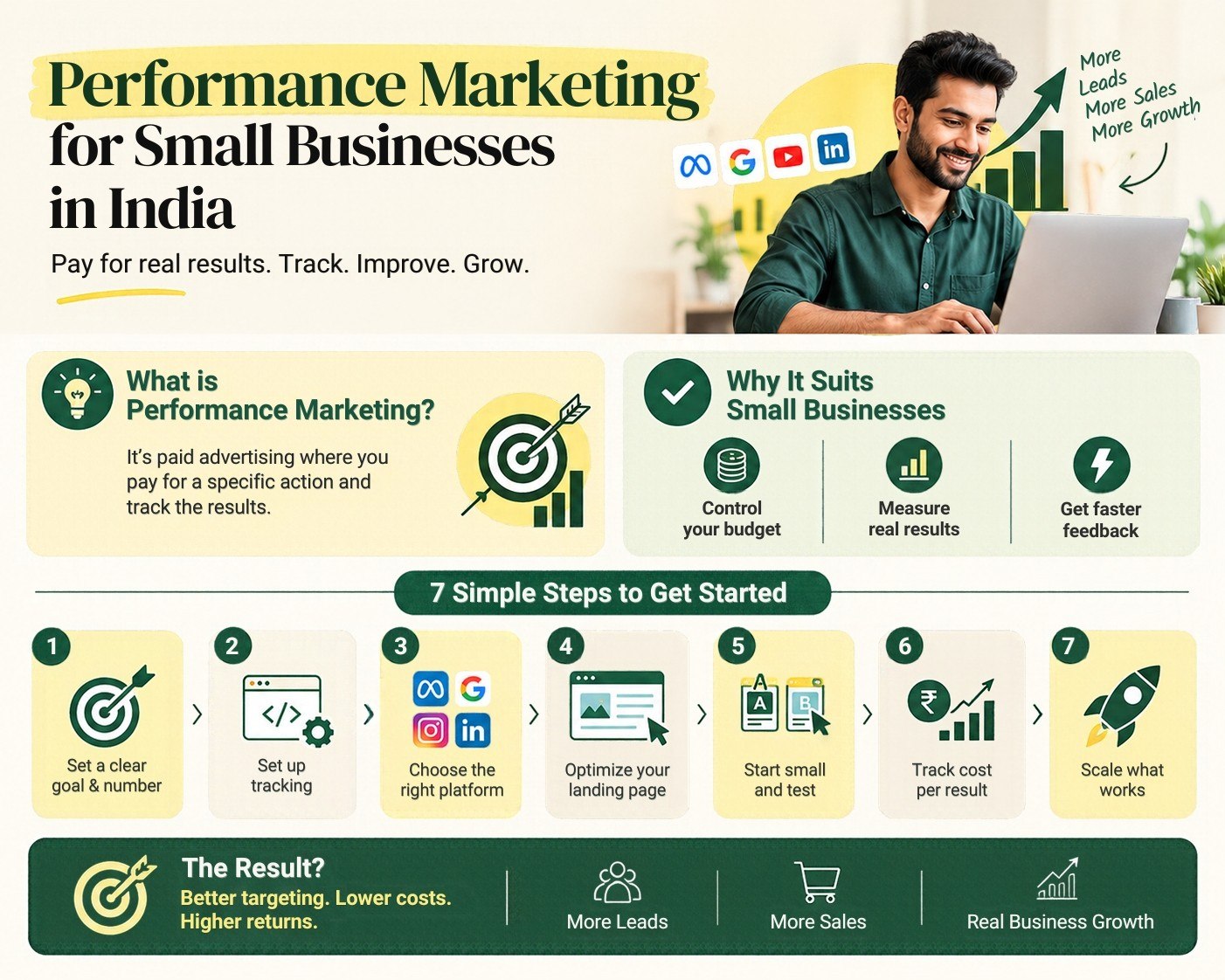
Performance marketing is paid advertising where you pay for a specific action and track it closely. That action could be a click, a form fill, a phone call, an app install or a sale. Instead of paying for exposure and hoping for the best, you pay for outcomes and use the data to decide where your money should go next.
The most common places to run it in India are Meta (Facebook and Instagram), Google Search and YouTube, and LinkedIn for B2B businesses.
Why it suits small businesses
Performance marketing works well for small businesses for three reasons:
- You control the budget. You can start small and increase spend only when something works.
- You can measure results. Reports show which ad, audience and message brought leads or sales.
- You get faster feedback. You can learn in days what organic content might take months to show.
The catch is that it needs a clear goal and proper tracking. Without them, ads become an expense instead of an investment.
Step 1: Set one clear goal and a number
Decide exactly what you want from your ads. More leads, more sales, more calls or more app installs? Then put a number on it. Work out how much a lead or sale is worth to your business and how much you can afford to pay to get one. Without this number, you cannot tell if your campaigns are working.
Step 2: Set up tracking before you spend
This is the step most small businesses skip, and it is the most important. Before running any ads:
- Install the ad platform’s tracking code on your website, such as the Meta Pixel
- Set up website analytics so you can see how visitors behave
- Define the actions you want to count, such as form submissions, calls or purchases
- Use tagged links so you know which ad each visitor came from
If your tracking is broken, every decision after this is a guess.
Step 3: Choose the right platform
Different platforms catch people at different moments:
- Google Search: reaches people who are already looking for what you sell, so it suits services and high intent products
- Meta (Facebook and Instagram): helps you reach people who have not heard of you yet, and works well for visual and consumer products
- LinkedIn: suits B2B businesses that want to reach decision makers, though it is usually more expensive
Start with one platform that matches how your customers find businesses like yours.
Step 4: Fix your landing page first
Ads only bring people to your door. The page they land on decides whether they act. Check that your landing page:
- Loads quickly on a mobile phone
- Says clearly what you offer and who it is for
- Has one main action, such as a form, a call button or a WhatsApp link
- Shows proof like reviews, client names or press coverage
A great ad sending people to a confusing page wastes the money you spent to get them there.
Step 5: Start small and test
Begin with a small daily budget you are comfortable with, and test two or three different ads against each other. Change one thing at a time, such as the headline, the image or the offer. Give each test a few days to run before judging it, because ad platforms need time to learn who responds best.
Step 6: Track cost per result, not likes
Likes and clicks feel good but they do not pay your bills. Watch the numbers that connect to your goal: cost per lead, cost per sale and the revenue you earn for each rupee spent. An ad with fewer likes and a lower cost per lead is the better ad.
Step 7: Scale what works and stop what does not
Once an ad is clearly working, increase its budget gradually and keep testing new versions. Turn off the ones that are not working. You can also run retargeting ads that show up only to people who visited your site or engaged with your content, since they already know you.
How performance marketing and brand building work together
Performance marketing is very good at capturing people who are ready to act. Brand building is what makes more people ready to act in the first place. A business with a trusted brand usually gets better results from the same ad spend, because people recognise the name and feel safer clicking. The strongest small businesses do both.
Common mistakes small businesses make with performance marketing
- Boosting posts without a goal. A boosted post with no clear objective rarely brings useful results.
- Spending before tracking is set up. You cannot improve what you cannot measure.
- Sending traffic to the homepage. A focused landing page almost always does better.
- Judging results after one day. Platforms need a few days to learn and settle.
- Changing everything at once. If you change many things, you will never know what made the difference.
- Watching likes instead of leads. Engagement is not the same as business results.
How Sorta Famous helps with performance marketing
Sorta Famous is a Mumbai-based PR and marketing agency that helps brands grow with strategy behind every rupee. All of our engagements start with an in-depth audit of your current visibility and goals, followed by a plan built around your calendar and not a generic campaign template. We also give project-based support without a long-term retainer, for businesses that need a focused push around a launch or season. And there are no account managers in between. You work directly with the strategists running your campaign.
To start running ads with clear tracking and a clear goal, get in touch with Sorta Famous for a free 30-minute consult.
Frequently asked questions
What is performance marketing in simple words?
It is paid advertising where you pay for a measurable action, such as a lead or a sale, and track the results so you know exactly what your money is doing.
Is performance marketing good for small businesses in India?
Yes. You can start with a small budget, measure every result and grow spending only when something works, which makes it a practical choice for small businesses.
What is the difference between performance marketing and digital marketing?
Digital marketing is the broad term for all online marketing, including content, SEO and social media. Performance marketing is the part focused on paid campaigns where results are tracked and paid for.
Which platform is best for performance marketing?
It depends on your customer. Google Search suits people who are already looking for what you sell, Meta suits discovery and consumer products, and LinkedIn suits B2B.
How long does it take to see results from performance marketing?
You can get early data within a few days, but it usually takes a few weeks of testing to find what works and improve your cost per result.
Do I need a big budget to start?
No. Start with a small amount, test carefully and increase spending only on what is working. A clear goal and proper tracking matter more than a big budget.